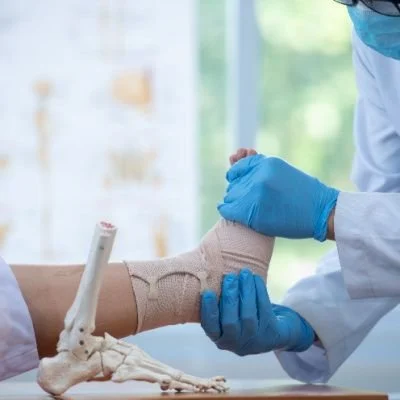
Understanding the Recovery Process After Ankle Replacement
Ankle replacement recovery is a structured process that protects the new joint, restores mobility, and helps you return to daily activities as safely as possible. Healing requires careful timing, often involving a period of limited weight-bearing, control of swelling, and progressive physical therapy. Following your surgeon’s instructions and rehabilitation plan closely can reduce complications and support the implant’s long-term function. Here is what to expect during the recovery process after ankle replacement:
Protecting the Joint Repair
The initial phase of recovery focuses on protecting the surgical site and managing swelling. Immediately after ankle replacement surgery, your leg will be immobilized in a splint or cast to maintain ankle stability, and you need to keep your foot elevated above heart level whenever possible. During this time, you cannot put any weight on your operated leg; you must use crutches, a knee scooter, or a wheelchair to move around. Keeping weight off the ankle is fundamental to allow the bone to heal around the new implant. Your doctor will prescribe medication to help manage pain, and you should take it as directed to stay comfortable.
Regaining Mobility in Stages
Once the initial healing has occurred, your doctor will remove the stitches or staples, and you will transition from a cast to a removable boot, which allows for some movement. Here’s what you can expect during this phase:
- Weight-bearing begins: You may begin placing a small amount of weight on your leg while wearing the boot, only as instructed by your surgeon.
- Physical therapy starts: You will begin gentle exercises to improve the range of motion and prevent stiffness in the joint.
- Swelling management continues: Although swelling decreases, you should still elevate your leg when resting to keep it under control.
- X-rays are taken: Your doctor will order imaging to make sure the bone is bonding correctly with the implant.
- Boot wear: You will wear the protective boot whenever you are up and moving to support the ankle.
You will gradually increase the amount of weight you put on your ankle under the guidance of your physical therapist.
Rebuilding Strength
The focus shifts to strengthening the ankle and normalizing your walking pattern by the second month. Physical therapy becomes more intense during this period; you will perform exercises designed to build muscle strength around the ankle and improve balance. Walking without a limp requires time and practice. Your therapist will help you retrain your gait so you move smoothly; you may practice standing on one leg or using a balance board. As you become stronger, you can resume low-impact activities, but high-impact activities are typically restricted to protect the implant.
Protecting Your Implant
Full recovery from ankle replacement can take up to 12 months. To get the best long-term results, you should review the following guidelines:
- Maintain a healthy weight: Reducing stress on the ankle joint helps prolong the implant’s lifespan.
- Choose low-impact exercises: Activities such as walking, golfing, and hiking are excellent for staying active without overloading the ankle.
- Wear supportive footwear: Shoes with good arch support and cushioning provide stability and comfort.
- Attend regular check-ups: Routine visits with your orthopedic surgeon allow them to monitor the implant and detect any issues early.
Taking care of your new joint is the best way to make sure it serves you well for the long term.
Schedule Your Ankle Replacement Appointment
Proper care and attention are key to promoting the longevity and functionality of your ankle replacement. Attending regular check-ups, avoiding high-impact activities, and following your surgeon’s recommendations can help you maximize your implant and maintain mobility. Contact a qualified orthopedic surgeon near you to schedule your ankle replacement appointment today.