
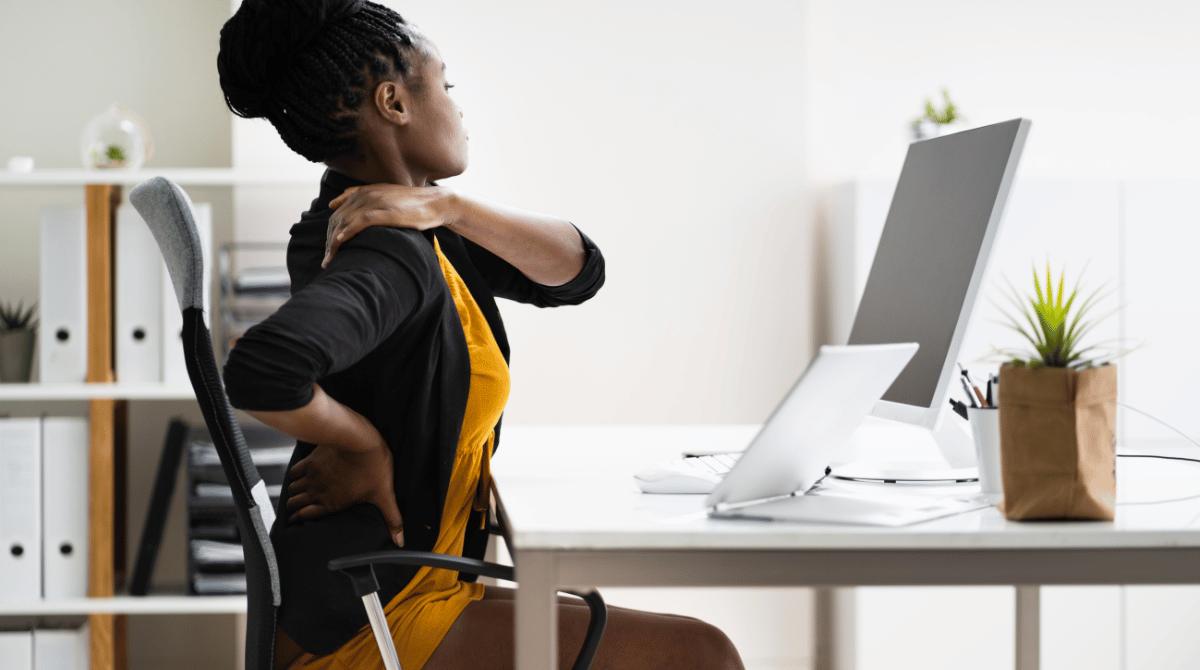
Identifying Common Triggers of Lower Back Pain in Everyday Life
Back pain can develop gradually or appear suddenly, often influenced by daily habits, movement patterns, and physical strain. Discomfort is often linked to routine activities that place ongoing stress on the lower spine. Here are the common triggers of back pain in everyday life:
Posture and Position Triggers
Your spine is designed to support your body, but holding certain positions for too long can create unnecessary strain. Many people don’t realize that their daily habits are slowly contributing to their discomfort until the pain becomes severe. The following positions often lead to significant back pain over time:
- Slouching at a desk: Hunching forward places immense pressure on the discs in your lower back.
- Looking down at your phone: Bending your neck forward to look at the screen shifts your spine out of alignment.
- Sitting for long periods: Remaining in a chair without breaks tightens the hip flexors and weakens core muscles.
- Driving without support: Car seats that lack lumbar support can cause your lower back to round out.
Changing these habits and adjusting your position frequently is a key way to protect your spine.
Movement and Lifting Triggers
How you move through the world plays a major role in your spinal health. Lifting heavy objects can cause acute injuries, but the technique matters more than the weight. Bending at the waist to pick something up puts the load directly on your lower back muscles and discs. You should bend at the knees and hips instead, keeping the object close to your chest.
Repetitive motions are another common source of back pain. Movements like twisting while holding a heavy load or constantly reaching overhead can wear down the structures in your back. Also, individuals who only work out on weekends often experience flare-ups. The sudden increase in demand on cold, unstretched muscles often leads to strains and sprains.
Sleep, Shoes, and Setup Triggers
Your environment and the equipment you use every day can either support your back or hurt it. Evaluate how these daily factors may be influencing your comfort levels:
- Unsupportive mattresses: A mattress that is too soft or too hard fails to keep the spine in a neutral line.
- Sleeping on your stomach: This position twists the neck and flattens the natural curve of the lower back.
- High heels or worn-out shoes: Footwear without arch support changes your gait and puts stress on your lower back.
- Carrying heavy bags: Lugging a heavy purse or backpack on one shoulder creates a spinal imbalance.
Making small adjustments to your sleep setup and footwear can make a fundamental difference in how your back feels.
Stress and Health Triggers
Physical factors are not the only causes of back pain. Psychological stress causes muscles to tense up, specifically in the neck and lower back. When you are anxious or overwhelmed, your body triggers a stress response that increases muscle tension and pain sensitivity. Managing stress through relaxation techniques can be just as helpful as physical therapy for some patients.
General health also plays a role. Excess weight, specifically around the midsection, pulls the pelvis forward and strains the lower back. Smoking is another risk factor because it reduces blood flow to the lower spine, which prevents your body from delivering enough nutrients to the discs. Addressing these overall health factors is a helpful strategy for long-term relief.
Schedule Your Back Pain Appointment
Living with persistent back pain stops you from enjoying your favorite activities and affects your well-being. If rest and home remedies are not working, it is time to see a specialist who can identify the specific cause of your back discomfort. Contact a qualified pain management specialist near you to schedule your back pain appointment today.